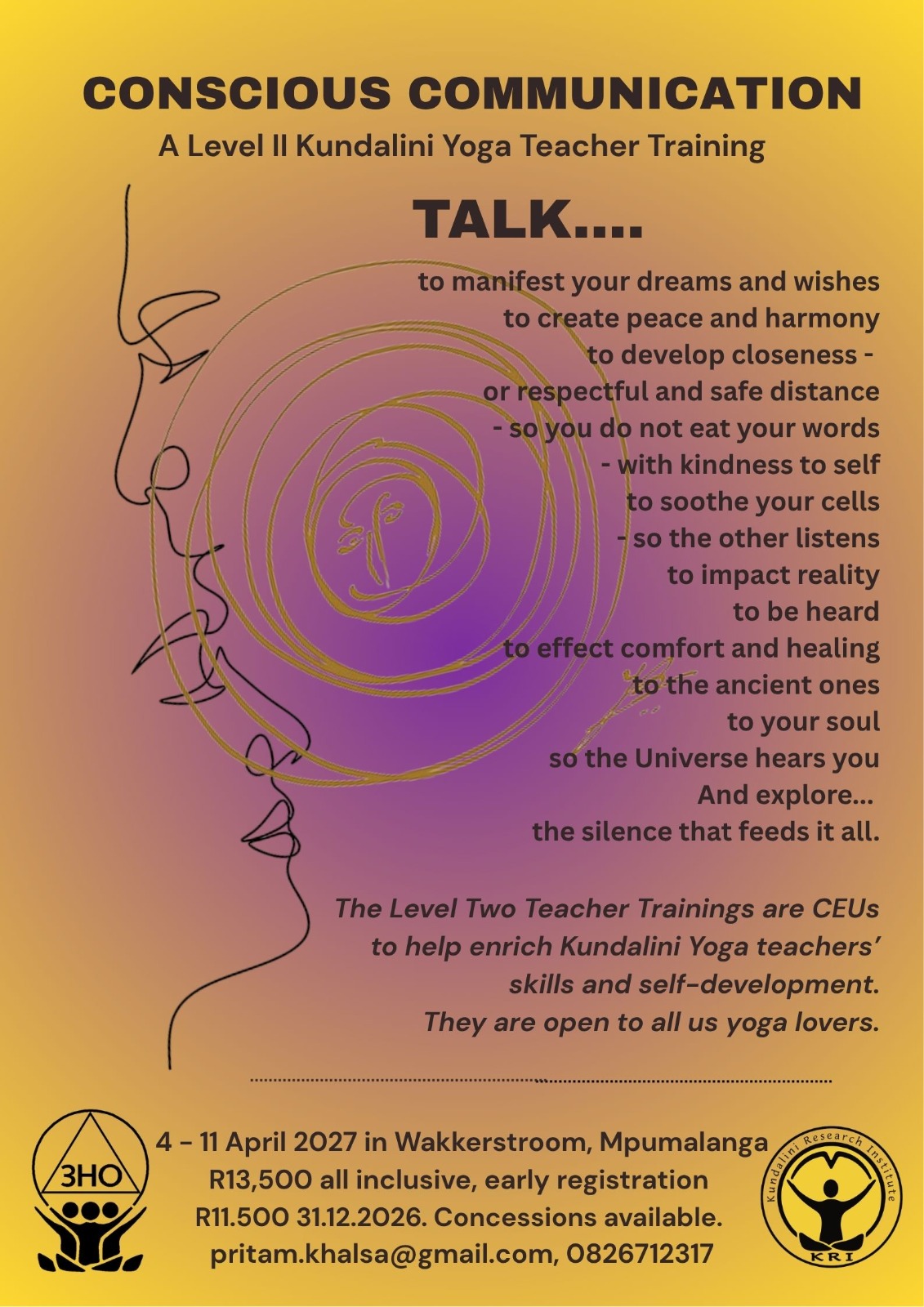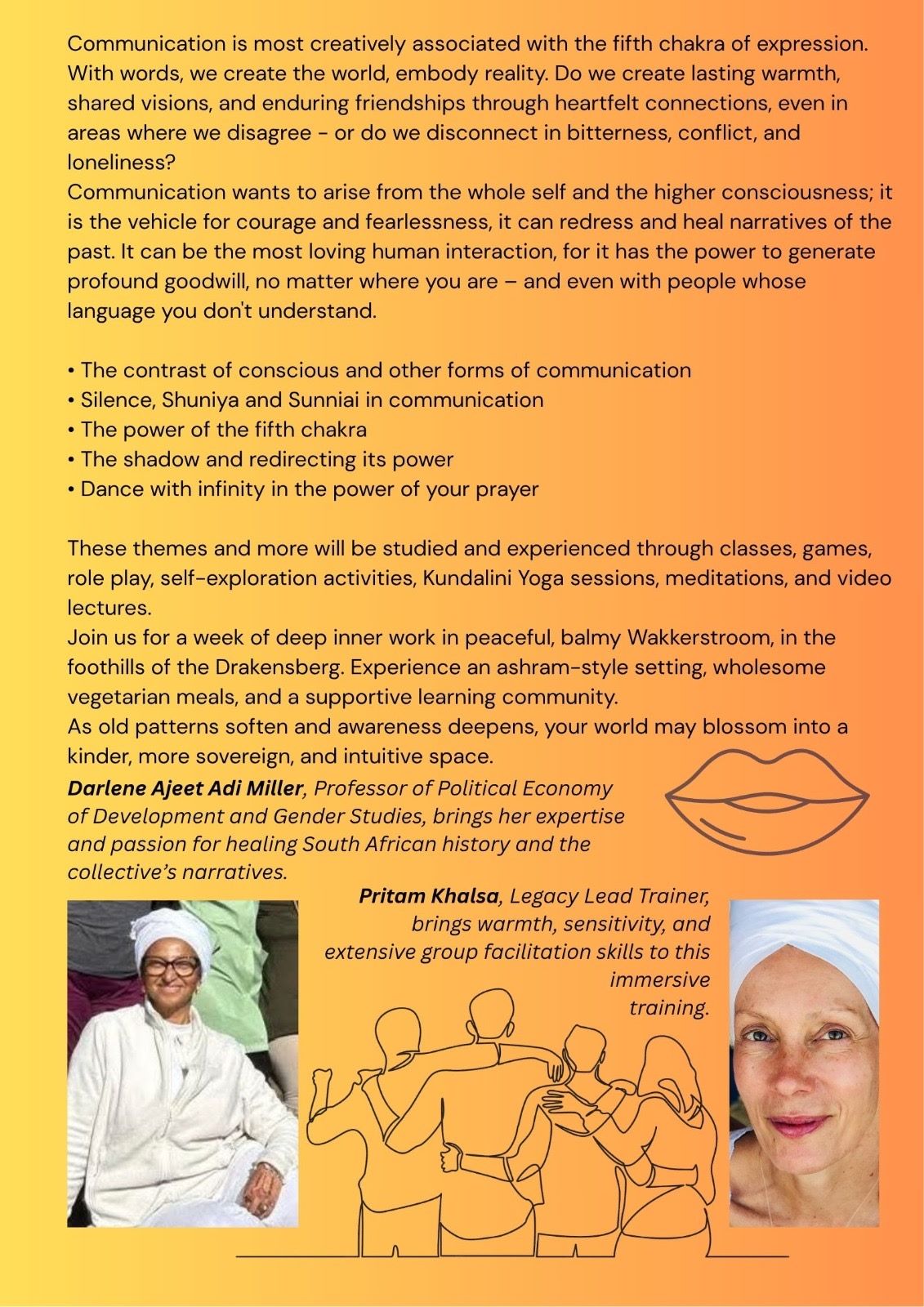

Conscious Communication – KRI Level Two Teacher Training (4 – 11 April 2027)
What Is Conscious Communication?
Conscious Communication is one of the five mirrors of Transformation in the KRI International Level Two Teacher Training. This module explores the relationship between communication, consciousness, self-awareness, and personal transformation. We examine not simply how we communicate with others, but who we are when we communicate.
Every interaction gives us an opportunity to observe ourselves. Our reactions, projections, assumptions, fears, expectations, and hidden agendas can become visible through our relationships with others. Conscious Communication teaches us to recognize these patterns and develop greater freedom in how we listen, speak, and respond.
Communication, Stress and the Shadow Self
Stress has a powerful influence on the way we communicate. Under pressure, we can become reactive, defensive, judgmental, controlling, or withdrawn. Our habitual patterns become stronger, and the shadow aspects of our personality can emerge.
Through Conscious Communication, we learn to recognize these patterns rather than automatically acting them out. We explore what happens within us when we feel challenged, misunderstood, criticized, or emotionally triggered. This self-awareness allows us to move from unconscious reaction toward conscious response.
Listening Beyond the Words
Conscious communication begins with conscious listening. We learn to listen not only to the words being spoken, but also to the emotions, intentions, assumptions, and energetic dynamics behind them.
We examine how our own experiences, beliefs, expectations, and projections influence what we hear. By becoming aware of these filters, we can begin to distinguish between what another person is actually communicating and the meaning we are creating in our own minds.
Deep listening requires presence. It asks us to resist the impulse to immediately judge, advise, defend, correct, or solve. Instead, we develop the capacity to remain present with another person and allow communication to unfold with greater clarity and authenticity.
Authentic and Conscious Communication
As Kundalini Yoga teachers, the quality of our communication directly influences our relationships with students. Teaching is not only about transmitting information; it is also about creating a space in which another person can experience greater awareness and connection with their own consciousness.
Conscious Communication develops the ability to speak honestly without aggression, establish boundaries without creating unnecessary conflict, and communicate difficult truths with compassion and clarity. We learn to recognize when our communication is motivated by fear, ego, control, or the need to be understood, and when it arises from a more neutral and authentic place.
The goal is not simply to become a more effective communicator. It is to become a more conscious presence in every relationship.
Communication and Personal Transformation
Conscious Communication is one part of the larger Transformation process within KRI Level Two Teacher Training. It is closely connected with the other four mirrors: Stress & Vitality, Mind & Meditation, Authentic Relationships, and the remaining areas of personal and spiritual development.
The way we communicate reflects the state of our mind, our ability to manage stress, and the quality of our relationships. At the same time, conscious communication can transform all of these areas. By observing ourselves in relationship, we discover patterns that may remain invisible when we are alone.
Transformation therefore takes place not only through understanding concepts, but through observing ourselves in real situations and repeatedly practicing new ways of being.
Developing the Capacities of a Kundalini Yoga Teacher
The module develops core capacities that are essential for teaching Kundalini Yoga and supporting others effectively. These include deep listening, self-awareness, neutrality, intuition, authentic expression, and the ability to remain centered during challenging interactions.
We are not simply asked to understand conscious communication intellectually. We are asked to embody it.
A teacher must be able to recognize their own projections, remain present when confronted with polarity, communicate with clarity, and respond from a place of awareness rather than habitual reaction. These are lifelong practices, but the Level Two training challenges us to demonstrate these capacities in our relationships, with our students, and in our everyday lives.
Practical Learning and Experience
The Conscious Communication module combines carefully selected meditations, kriyas, quotations, exercises, and interactive learning experiences. Participants explore communication through discussion, self-observation, role-play, questioning, reflection, and practical application.
The emphasis is experiential. We observe how we communicate, identify habitual patterns, and experiment with different ways of listening and responding. Through sustained practice, we begin to understand how small changes in awareness can create significant changes in our relationships.
From Reaction to Conscious Response
At the heart of Conscious Communication is the space between what happens to us and how we respond.
When we become aware of our habitual reactions, we create the possibility of choosing a different response. We can pause rather than react, listen rather than assume, inquire rather than judge, and speak from clarity rather than fear or defensiveness.
This is where communication becomes a practice of transformation.
Conscious Communication ultimately invites us to become more aware of ourselves, more present with others, and more authentic in the way we relate to the world. For a Kundalini Yoga teacher, this capacity is fundamental: to communicate in a way that supports awareness, elevates consciousness, and allows each person to connect more deeply with the creative reality of their own soul.